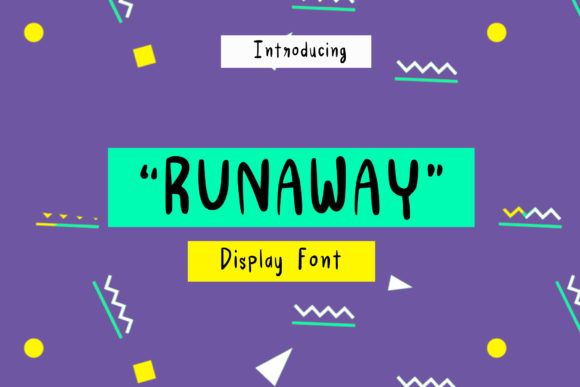
Runaway: A Joyful Display Font for Creative Projects
I was working on a brand board for a new boutique skincare line the other day, and I found myself staring at a blank canvas. The mood needed to be fresh, playful, and approachable—something that would make customers feel like they were stepping into a world of self-care and carefree confidence. That’s when I stumbled upon Runaway. It wasn’t just any font; it had this quirky charm that felt like a breath of fresh air.
A Quirky Character with a Purpose
Runaway is a display font that radiates joy and whimsy. Its curves are soft, its lines are playful, and it carries an energy that feels both modern and nostalgic. It's not one of those fonts that try too hard to be trendy—it has a natural, almost hand-drawn quality that makes it stand out without shouting for attention. The letterforms have a slight bounce to them, as if they’re dancing across the page. This kind of personality is perfect for brands that want to communicate warmth and approachability.
Testing it out on a logo concept, I noticed how well it balanced between being fun and professional. It didn't feel too childish, but it also didn’t come off as stiff or corporate. That’s a rare find in display fonts, especially ones that lean into the cute and quirky side of design.
Runaway in Action: Real Design Applications
I used Runaway in several parts of the branding project. On the logo itself, it worked beautifully as the main typeface. It gave the brand a sense of identity that felt unique yet familiar. When I placed it on a packaging mockup, the font added a touch of personality that made the product feel more human. It wasn’t just a label—it was a statement.
On social media layouts, Runaway brought a sense of playfulness to headlines and callouts. It paired well with clean sans-serif fonts for body text, creating a nice contrast without clashing. For business cards, it was great for names and taglines but not so much for long paragraphs. That’s something to keep in mind—if you're using it for longer text, it might need some support from a more readable typeface.
When I tested it on a website header, the font stood out against a minimalist background. It felt like the perfect way to introduce visitors to the brand’s tone. However, I did notice that at smaller sizes, the details in the letters started to get lost. So, it's best reserved for larger headings or short phrases where its character can shine through.
Pairing Runaway with Other Fonts
Font pairing is always a delicate balance, and Runaway plays nicely with a variety of styles. For a more refined look, I paired it with a clean sans-serif like Helvetica Neue for body text. It created a nice contrast between the playful and the practical. If I wanted a more artistic vibe, a script font like Pacifico worked well for accents or signature elements. But I always made sure that Runaway remained the star of the show, never overshadowed by other fonts.
One thing to note is that Runaway isn’t suited for every project. It’s a display font, which means it’s best used sparingly. Long blocks of text or formal documents would benefit from a more traditional typeface. It's not the kind of font you’d use for a corporate report or legal document. Instead, think of it as a creative tool for logos, packaging, headers, and anything that needs a little extra flair.
Practical Tips for Using Runaway
If you're considering Runaway for your next project, I recommend testing it in different contexts before committing. Try it on a logo draft, a brand board, and even a printed business card. See how it behaves in different sizes and colors. Also, don’t forget to check the licensing terms—especially if you plan to use it in client work, templates, or print-on-demand products. Ensuring you have the right permissions is crucial for avoiding any legal hiccups down the road.
Another tip is to explore the available styles and alternates. Some display fonts offer variations that can add more depth to your designs. Even small changes, like swashes or ligatures, can elevate the overall look and feel of your project.
Runaway is a font that brings emotion to typography. It's not just about what it looks like—it's about how it makes people feel. Whether you're designing a logo, a social media graphic, or a packaging label, Runaway has the potential to make your designs more engaging and memorable. Just remember to use it wisely, and let its charm do the talking.